Phone:
(701)814-6992
Physical address:
6296 Donnelly Plaza
Ratkeville, Bahamas.

Phone:
(701)814-6992
Physical address:
6296 Donnelly Plaza
Ratkeville, Bahamas.
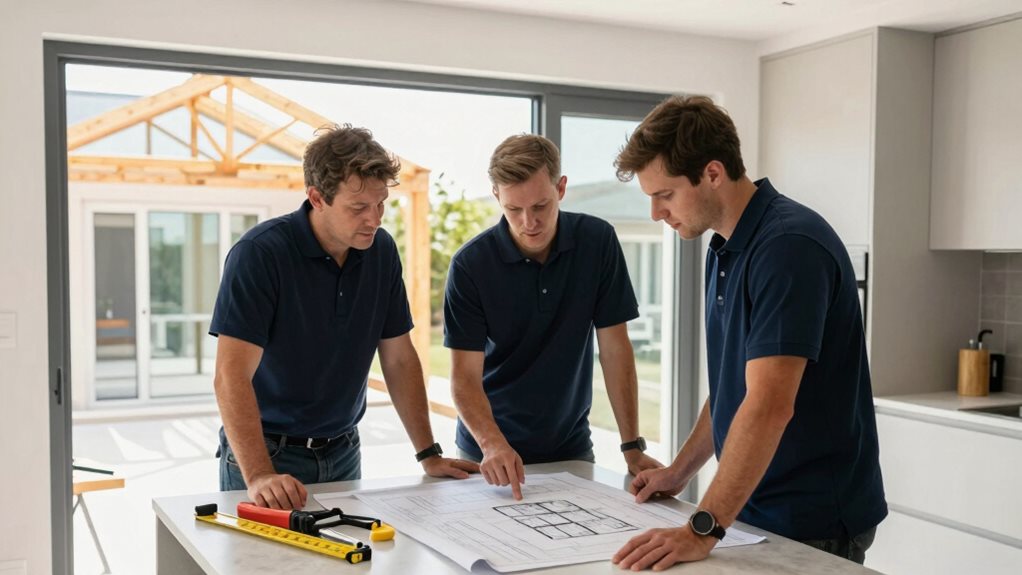
Choosing the right extension builder transforms your home renovation journey, but what critical mistakes are most homeowners making?
To choose the right extension builders, start by clearly defining your project goals and budget. Research local specialists with proven track records, verifying their credentials, insurance, and regulatory compliance. Review their portfolios and visit previous projects to assess quality. Compare detailed quotes, focusing on transparency and payment terms. Check references and evaluate communication skills—you’ll need someone who listens well. Don’t overlook workmanship guarantees and after-service support for long-term peace of mind.

Before starting any home extension project, you’ll need to clearly define your goals and requirements to guarantee the final result meets your expectations.
Consider what problem you’re trying to solve—whether it’s creating more living space, updating an outdated area, or adding value to your property.
Take time to identify key priorities by listing must-have features versus nice-to-have elements.
Will you need additional bedrooms, an expanded kitchen, or perhaps a home office? Be specific about your spatial needs, design preferences, and functionality requirements.
Equally important is to outline budget constraints early in the process.
Determine not just your maximum spending limit but also allocate funds for different aspects of the project, including contingencies for unexpected costs that invariably arise during construction. Additionally, keeping in mind potential house extension types can help inform your decisions and clarify your specific needs for the project.
When selecting professionals for your home extension, how do you separate the exceptional from the merely adequate?
Start by gathering local expert recommendations from neighbors, friends, or community groups who’ve recently completed similar projects. These firsthand accounts often reveal insights you won’t find in online reviews.
Next, thoroughly examine past project reviews across multiple platforms. Look beyond star ratings to evaluate how contractors handle challenges and communicate with clients.
Star ratings tell half-truths. Dig deeper to discover how professionals navigate unexpected hurdles and maintain client relationships.
Pay special attention to reviews mentioning projects similar to yours, noting timeline adherence and budget management.
Visit completed extensions if possible—seeing the quality firsthand tells you more than photos ever could.
Don’t hesitate to ask potential contractors for references from projects completed in the last year, then follow up with those homeowners about their experience.
Your due diligence now prevents disappointment later.
Verifying a contractor’s credentials and insurance represents your first line of defense against potential disasters during your extension project.
Start by requesting proof of all relevant licenses and certifications, confirming they’re current and match your project’s requirements. Thorough credential verification involves checking their professional affiliations and reviewing past building regulation compliance records.
Don’t overlook extensive insurance coverage—request certificates for liability and workers’ compensation policies.
Ask your contractor to explain how they’ll maneuver building codes and permit processes specific to your area. Many homeowners regret skipping this vital step when problems arise mid-project.
Contact your local building authority to confirm your contractor’s standing and verify they haven’t faced regulatory penalties.
This due diligence might seem tedious initially, but it safeguards your investment and guarantees a legally compliant extension.
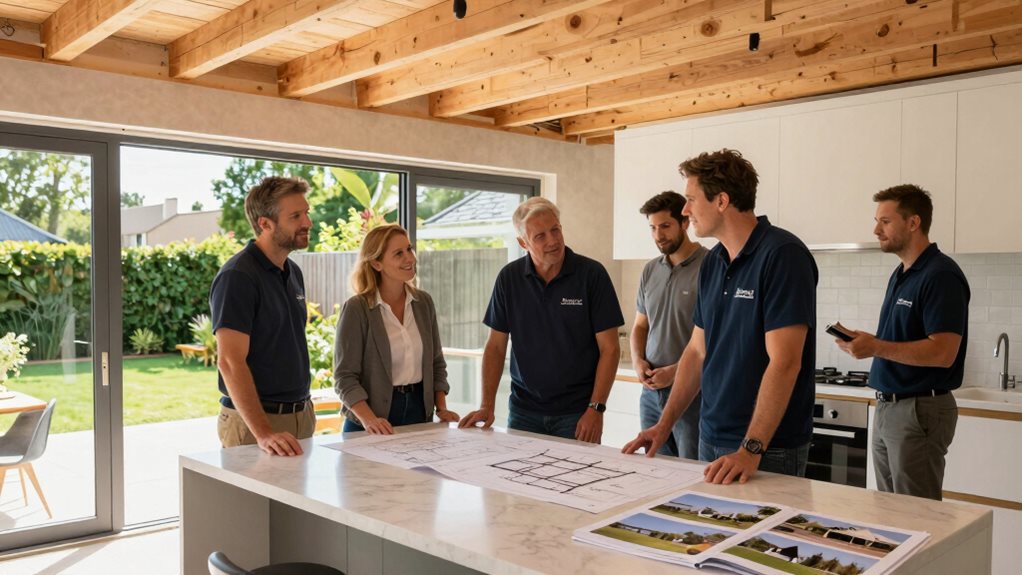
When reviewing a contractor’s portfolio, you’ll want to examine the craftsmanship quality in their previous extensions, looking for attention to detail and finishing touches that align with your standards.
Take time to assess how well they’ve adhered to completion timeframes on past projects, as this often reveals their reliability and project management capabilities.
You should also evaluate their design versatility by examining how they’ve adapted to different architectural styles, which demonstrates their ability to tailor their work to your home’s unique characteristics.
Before entrusting your home extension to any team, you’ll need to thoroughly evaluate the quality of their craftsmanship through tangible evidence.
Look beyond glossy photos and marketing materials by examining their actual workmanship in person. Run your hands along finishes, check that corners meet precisely, and inspect how materials shift from one to another.
High-quality builders maintain consistent craftsmanship standards throughout their projects—from the visible decorative elements to hidden structural components.
Ask about their quality assurance processes: Do they’ve multiple inspection checkpoints? How do they handle inevitable construction challenges?
Don’t hesitate to bring a knowledgeable friend or hire an independent inspector to accompany you during site visits. Their trained eye might catch subtle details you’d otherwise miss.
While craftsmanship reveals the quality of work you’ll receive, timeline reliability determines when you’ll actually enjoy your new space.
Ask potential builders about their project timelines and request a detailed schedule showing key milestones. Don’t just take their word for it—speak with previous clients about how accurately the team adhered to promised completion dates.
Reputable builders implement effective completion strategies to manage inevitable challenges. They’ll explain their approach to handling delays from weather, material shortages, or unexpected structural issues.
Pay attention to how they communicate about potential setbacks; transparency here indicates professional integrity.
Remember that the fastest timeline isn’t always the best. Quality builders allocate realistic timeframes rather than promising unreasonable deadlines they can’t meet.
Your goal is finding a team that delivers exceptional work on a predictable schedule.
Since your extension should seamlessly blend with your existing home while fulfilling your vision, evaluating a builder’s design versatility becomes crucial.
Request to see their portfolio showcasing diverse projects that demonstrate design adaptability across different architectural styles and property constraints.
When reviewing their work, look beyond aesthetics to assess functional aesthetics—how spaces flow, how natural light is maximized, and how storage solutions are incorporated.
Don’t just rely on photographs; arrange visits to completed projects where you can experience the quality firsthand and speak with previous clients.
Pay attention to how builders have tackled challenges similar to yours, whether it’s extending a period property or creating contemporary spaces.
The best extension specialists won’t impose a signature style but will adapt their approach to complement your home’s character while meeting your lifestyle needs.
When you’ve received builders’ proposals, examine each one for a thorough line-item cost breakdown to understand where your money’s going.
Comparing the scope analysis between quotes will reveal variations in materials, timeline projections, and construction approaches that might influence your decision.
You’ll also want to scrutinize payment schedule terms carefully, as favorable milestone-based payments can protect your investment and guarantee steady progress throughout your extension project.
Three detailed quotes from different builders serve as your financial roadmap for a home extension project.
When reviewing these estimates, insist on a thorough line-item cost breakdown that reveals exactly where your money’s going. This cost transparency helps you identify potential areas of concern or unexpected expenses before signing any contracts.
A detailed breakdown should include separate entries for materials, labor, permits, waste removal, and project management fees.
You’ll want to compare how each builder allocates costs across these categories—significant variations often reveal different approaches or potential corner-cutting.
Don’t hesitate to question line items that seem vague or unusually high. Phrases like “miscellaneous expenses” without specifics should raise red flags.
The builder who provides the clearest, most detailed breakdown demonstrates both professionalism and respect for your investment.
Beyond the financial figures, a thorough scope analysis comparison reveals the true value proposition of each builder’s quote. When evaluating multiple proposals, you’ll want to implement effective scope validation techniques to guarantee nothing essential has been overlooked.
Create a comparison matrix listing all project elements—from demolition to finishes—and check how each builder addresses these components.
Don’t just focus on what’s included; pay attention to what’s missing. Some builders might exclude vital elements like waste removal or council approvals, leading to unexpected costs later.
The most effective comparison metrics include timeline commitments, material specifications, and warranty details—not just bottom-line pricing.
A carefully structured payment schedule protects both you and your builder throughout the home extension process.
When comparing quotes, pay close attention to how builders organize payment milestones. Reputable professionals typically request a modest deposit (10-15%), followed by installments tied to specific completion stages rather than calendar dates.
Look for payment structures that balance risk appropriately—you shouldn’t pay for work before it’s completed, but your builder needs sufficient cash flow to purchase materials and pay subcontractors.
Compare installment options across different quotes, noting whether they include retention clauses that withhold 5-10% of the final payment until any defects are resolved.
Why should you evaluate a contractor’s communication style before signing any contract? Your extension project will require months of collaboration, making team dynamics and communication styles critical factors for success.
The contractor you choose will become a temporary fixture in your life, so personal compatibility shouldn’t be underestimated.
Trust your instincts. If something feels off during preliminary conversations, it’ll likely amplify during the stress of construction.

Before signing any agreement, thoroughly review the contract terms and payment schedule to protect your investment and guarantee a seamless renovation process.
During contract negotiation, confirm every aspect of your extension project is clearly outlined, including materials, timelines, and contingency plans for unexpected issues.
Payment clarity is non-negotiable—establish when deposits are due, how milestone payments are triggered, and what constitutes project completion.
Never sign without crystal-clear payment terms—protect your investment by defining every financial milestone before work begins.
You’ll want a schedule that ties payments to completed work rather than arbitrary dates. Don’t hesitate to question terms you find confusing or potentially problematic.
Request a cooling-off period that gives you time to review the contract with a legal professional if needed.
Thoroughly vetting your builder’s reputation through references and testimonials constitutes one of your most powerful research tools when planning a home extension. Client experiences provide real-world insights into what you can expect when working with a particular contractor.
Don’t simply trust marketing materials—dig deeper by requesting contact information for previous clients and studying online reviews across multiple platforms.
Effective project management represents the backbone of any successful home extension, determining whether your renovation dreams materialize seamlessly or descend into a costly nightmare.
When interviewing potential builders, ask detailed questions about their approach to scheduling, resource allocation, and communication protocols during the construction process.
Request to see examples of their project management systems, including how they track milestones and handle inevitable delays. The best extension teams offer reasonable timeline flexibility without compromising quality, understanding that unforeseen challenges often arise during renovations.
They’ll provide you with a thorough timeline that includes buffer periods for contingencies.
Don’t hesitate to inquire about their policy for keeping you updated on progress and how promptly they address concerns.
When selecting contractors for your home extension, you’ll want to thoroughly examine their warranty periods, which can range from one to ten years depending on the company’s confidence in their craftsmanship.
You should also inquire about their emergency repair protocols, as the most reliable teams will offer 24-hour response times for serious issues that could compromise your home’s structure or safety.
Always get all workmanship guarantees in writing, complete with specific terms about what’s covered, excluded, and the process for making claims—this documentation will prove invaluable should any issues arise after project completion.
A reputable extension team‘s confidence in their work manifests clearly through their warranty offerings. When evaluating potential builders, you’ll want to examine warranty period length as a key indicator of their commitment to quality.
Standard warranty options typically range from 1-10 years, but the most trustworthy professionals often extend coverage beyond industry minimums.
You’re making a noteworthy investment in your home—ensure it’s protected by thorough, long-term warranty coverage.
The most reliable home extension teams distinguish themselves not merely through their construction quality but also their protocols for handling unexpected issues after project completion.
When vetting potential builders, you’ll want to inquire specifically about their emergency protocols for addressing structural problems, leaks, or electrical issues that might arise.
Ask each contractor to outline their repair procedures: How quickly do they respond to urgent calls? Is there a dedicated emergency line? Will you deal with the original team or be redirected to a service department?
The best companies provide detailed documentation explaining their emergency response system and typically guarantee same-day assessment for critical issues.
Don’t hesitate to request examples of how they’ve handled previous emergency situations—this insight into their problem-solving approach can prove invaluable when you’re facing an unexpected home extension emergency.
Before signing any contract for your home extension, carefully examine the documented assurances that will protect your investment long after the builders have packed up their tools.
Reputable extension teams will offer thorough warranty packages that clearly outline your rights and their responsibilities.
When reviewing guarantee documentation, confirm you’re getting robust protection:
Don’t hesitate to negotiate better terms if the standard guarantees seem inadequate.
Selecting the right extension team isn’t solely about finding builders—it’s about creating partnerships built on trust and expertise. You’ll discover that thorough vetting pays dividends when your vision materializes without compromise. By balancing credentials, craftsmanship, and communication, you’re investing in your home’s future, not merely its footprint. Remember, the best extension builders don’t merely construct spaces; they transform how you’ll live within them.