Phone:
(701)814-6992
Physical address:
6296 Donnelly Plaza
Ratkeville, Bahamas.

Phone:
(701)814-6992
Physical address:
6296 Donnelly Plaza
Ratkeville, Bahamas.
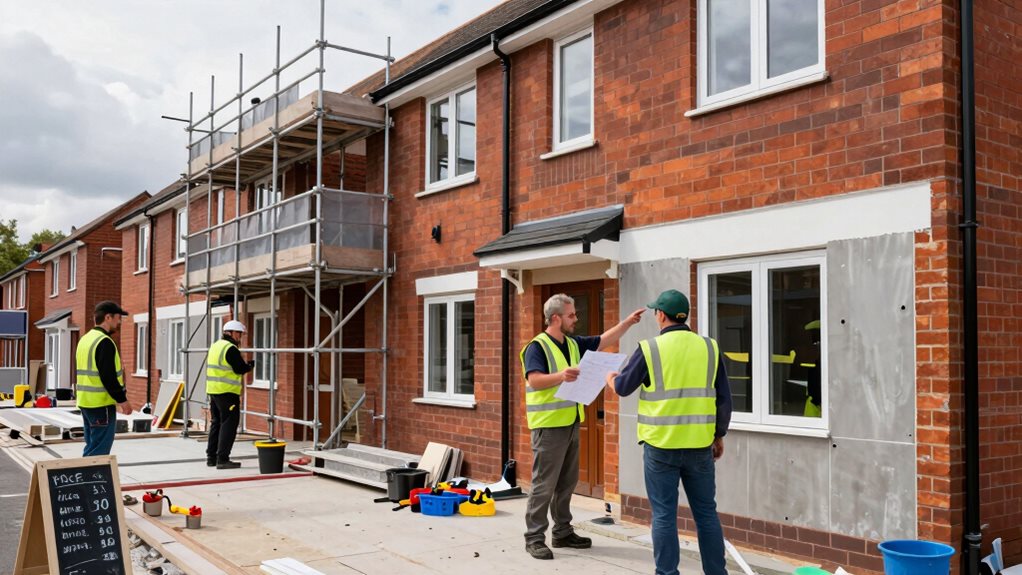
Find out Manchester's extension building costs that vary widely—from £1,500 to £2,500 per square meter depending on location and project type.
In Manchester, extension builders typically charge £1,500-£2,000 per square meter for single-story extensions and £1,800-£2,500 for double-story projects. Your location within Manchester affects pricing—South Manchester commands 10-15% higher rates than North Manchester areas. Factor in additional costs like architectural services (£1,000-£3,000) and building regulations approval (£500-£1,000). For accurate budgeting, you’ll need to take into account material quality, builder reputation, and neighborhood-specific factors that influence your final quote.
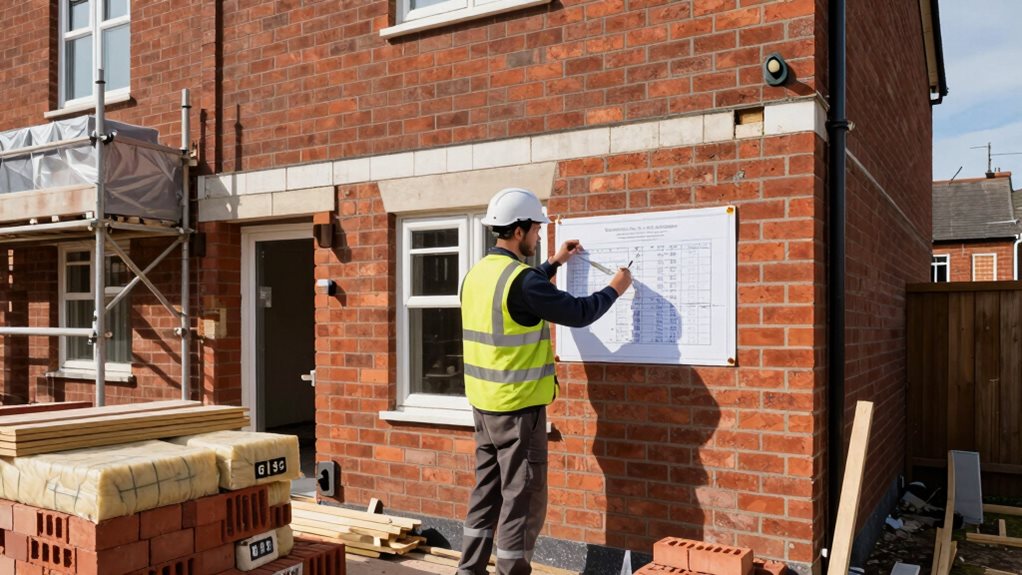
When considering a home extension in Manchester, understanding the average costs per square meter becomes fundamental for planning your budget effectively.
Currently, you’ll find that single-story extensions typically range from £1,500-£2,000 per square meter, while double-story projects often cost £1,800-£2,500 per square meter due to their complexity.
Regional pricing in Manchester varies slightly compared to the national average, with the city’s construction demands influencing costs.
Different average extension types command varying prices: kitchen extensions generally fall at the higher end due to plumbing and electrical requirements, while simpler living space additions may cost less.
You’ll need to factor in additional expenses like architectural services (£1,000-£3,000) and building regulations approval (£500-£1,000) to create a thorough budget for your Manchester extension project. A well-planned extension can enhance the heart of the home, ultimately providing more value and functionality to your living space.
Several critical variables influence the quotes you’ll receive from extension builders across Greater Manchester, creating notable price variations between seemingly similar projects.
Builder reputation plays an important role in pricing—established contractors with stellar portfolios typically command premium rates, but often deliver superior craftsmanship and reliability that justify the investment.
Your extension timeline also dramatically impacts costs. Rushed projects requiring additional labor or overtime work will incur surcharges, while flexible schedules allow builders to optimize their resource allocation.
Other key determinants include architectural complexity, material quality, site accessibility, and whether structural modifications are needed.
When comparing quotes, don’t merely focus on bottom-line figures—examine what each proposal includes. Many homeowners discover that apparently higher quotes actually offer better value when analyzing the thorough scope of work provided.
Understanding price differences between single-storey and double-storey extensions represents a major decision point for Manchester homeowners planning to expand their living space.
You’ll typically find single-storey extensions range from £1,500-£2,000 per square meter, while double-storey projects can cost £2,200-£3,000 per square meter.
Single storey benefits include simpler planning permission requirements and shorter construction timelines—usually 8-12 weeks compared to 12-16 weeks for double-storey projects.
They’re also less disruptive to your daily life during construction.
Double storey drawbacks often include more complex structural considerations, higher scaffolding costs, and potentially more challenging planning hurdles, especially in conservation areas.
However, they do offer better value per square meter when you consider the total space gained versus the foundation and roofing costs.
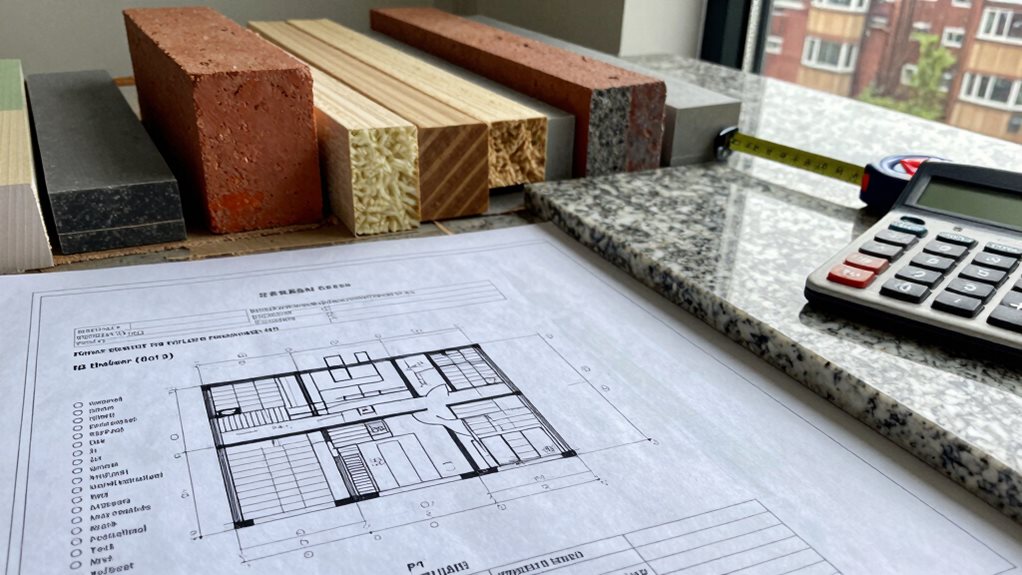
When planning your Manchester extension, you’ll need to take into account that brick and mortar typically constitute 15-20% of your overall material budget, with premium facing bricks costing up to £900 per thousand.
Kitchen extensions demand additional investment in cabinetry, countertops, and appliances, which can easily represent 30-40% of your material costs.
Your foundation expenses will fluctuate based on soil conditions unique to Manchester’s varied terrain, with clay-heavy areas requiring deeper, more expensive foundations compared to sites with stable, sandy soil.
The foundation of your extension budget rests heavily on brick and mortar costs, which typically account for 15-20% of your total material expenses in Manchester.
When planning your extension, you’ll need to take into account several factors that influence these prices.
You’ll find Manchester’s microclimate necessitates weather-resistant materials, potentially increasing your investment but reducing long-term maintenance costs considerably.
Materials for your kitchen extension represent a considerable investment, accounting for 40-50% of your overall budget in Manchester’s competitive construction market.
When selecting materials, you’ll need to balance aesthetics with functionality and cost.
Cabinetry typically ranges from £3,000-£8,000 depending on whether you choose stock or custom options. Countertops vary greatly: laminate (£50/m²), solid surface (£300/m²), and granite or quartz (£500+/m²).
Flooring costs between £25-£100/m² depending on material quality.
Many homeowners now opt for eco-friendly materials like bamboo flooring or recycled glass countertops, which can be cost-effective solutions long-term.
Energy-efficient windows (£500-£1,000 each) and LED lighting systems reduce ongoing utility expenses.
Remember to factor in appliances (£2,000-£5,000) when planning your kitchen extension budget.
Foundations form the critical base of your extension project, typically consuming 10-15% of your total budget in Manchester’s variable soil conditions.
Understanding what drives these costs helps you prepare financially for your build.
Several factors influence your foundation expenses:
You’ll need a professional soil survey before finalizing your budget, as foundation requirements greatly impact overall extension pricing.
When planning your Manchester extension project, understanding labour costs and realistic timeframes becomes crucial for budgeting and setting appropriate expectations. Most builders charge between £150-£250 per day, though rates vary based on experience and specialization. Your project’s complexity greatly impacts these figures.
Typically, a single-story extension takes 8-12 weeks, while double-story projects extend to 12-16 weeks. Weather delays, material availability, and incorporating sustainability practices can affect this timeline. Builders implementing energy efficiency measures may require additional time but deliver long-term cost benefits.
You’ll find that reputable Manchester contractors provide detailed timelines with contingency periods built in. Request a breakdown of labour hours for each phase to track progress effectively.
Remember that quality workmanship shouldn’t be rushed—proper planning now prevents costly delays later.
Planning permission costs for your Manchester extension typically range from £206 for a simple application to over £500 for more complex projects, with potential additional fees for site inspections.
You’ll also need to budget for Building Regulations charges, which are calculated based on your project’s size and complexity, starting around £400 for smaller extensions.
These regulatory expenses should be factored into your overall budget early, as they’re unavoidable prerequisites before your builders can break ground on your extension project.
Before starting your extension project in Manchester, you’ll need to budget for the necessary planning permission fees and building regulations costs.
The planning application process involves specific fee structures that vary based on your project’s scope and nature.
When calculating your planning permission costs, consider these key factors:
These fees are separate from building regulations costs, which you’ll need to factor into your overall budget.
Unlike planning permission fees, building regulations charges represent a separate financial consideration that you’ll need to address before your Manchester extension project can proceed legally.
These fees typically range from £400 to £800 for residential extensions, depending on your project’s size and complexity.
You’ll encounter two primary payment stages: an initial submission fee when you apply for approval, and subsequent charges for building inspections throughout your construction process.
Each inspection guarantees your extension meets safety standards and structural requirements.
Request a detailed breakdown of these costs from your chosen building control body, either through Manchester City Council or private approved inspectors.
Remember to budget for compliance documentation fees as well, which provide crucial certification upon project completion.
These certificates prove your extension adheres to all required building regulations.
When you’re exploring extension costs in Manchester, you’ll quickly discover that prices vary markedly across the city’s diverse districts. The neighborhood demographics and property styles greatly influence what you’ll pay for your extension project.
Consider these pricing variations across Manchester:
Manchester’s extension costs fluctuate significantly by district, with neighborhood character and property type driving price variations.
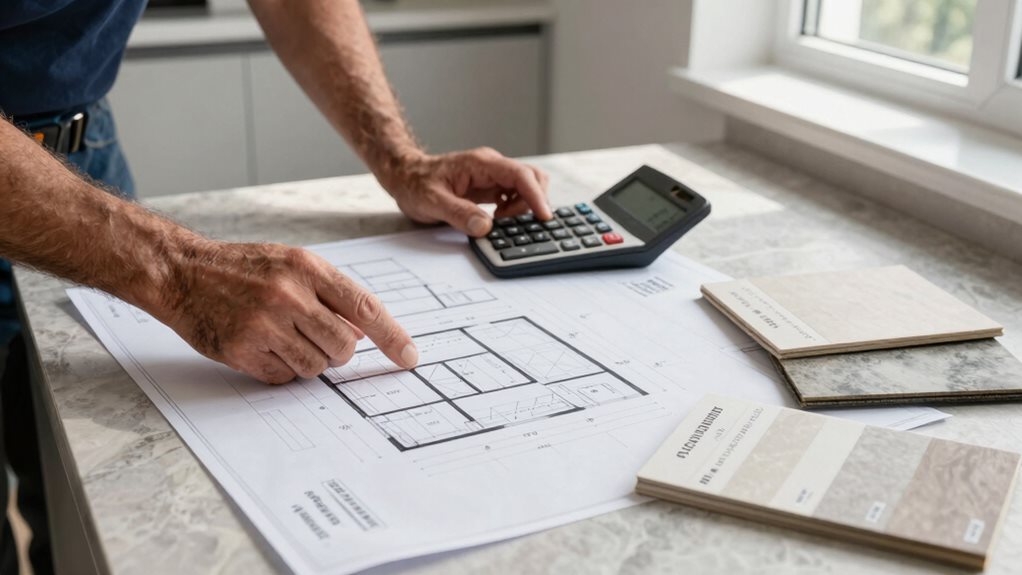
When planning your Manchester extension, you’ll need to factor in how premium fixtures like marble countertops or custom cabinetry can increase your overall budget by 15-30%.
Smart home technology integration—including automated lighting, climate control, and security systems—typically adds £2,000-5,000 to your project costs but offers long-term convenience and energy savings.
Your choice of garden access features, from simple French doors (£1,500-2,500) to elaborate folding door systems with seamless indoor-outdoor conversions (£5,000-10,000), will greatly affect both your extension’s functionality and final price point.
Three key elements transform an ordinary extension into a luxury space: high-end fixtures, premium materials, and bespoke design elements.
When you’re planning your Manchester extension, it’s important to understand how luxury finishes influence your budget.
The luxury fixtures premium typically includes:
You’ll find that while these luxury features greatly increase your initial investment, they often improve your property’s value proportionally.
Modern extension projects increasingly incorporate smart home technology, creating spaces that blend comfort with cutting-edge convenience.
When planning your Manchester extension, you’ll need to budget £2,500-£7,000 for all-encompassing smart home systems that control lighting, heating, and security.
Energy efficiency technologies like smart thermostats (£200-£300) and automated lighting (£50-£150 per room) offer long-term savings despite upfront costs.
For ideal integration, you’ll want to allocate funds for professional installation and wiring during the construction phase rather than retrofitting later.
Many Manchester homeowners find that dedicating 5-10% of their total extension budget to technology creates spaces that are both future-proofed and immediately functional.
Remember that while basic automation is affordable, sophisticated systems with voice control and advanced energy efficiency monitoring will greatly impact your overall investment.
Creating seamless shifts between your extension and garden greatly impacts both your lifestyle and budget. When planning your Manchester extension, consider how you’ll maneuver between indoor and outdoor spaces for maximum enjoyment year-round.
Garden access features typically add £1,500-£3,500 to your overall costs, depending on complexity and materials.
Four crucial garden access considerations include:
Your selection should balance aesthetic preferences, practical requirements, and maintenance needs while complementing your extension’s architectural style.
While planning your home extension in Manchester might seem straightforward on paper, many homeowners find themselves caught off-guard by unexpected expenses that weren’t factored into their initial budget.
These hidden expenses often emerge during different project phases, potentially derailing your carefully planned finances.
Watch for unexpected fees related to planning permissions, which may require multiple submissions or specialist reports.
Don’t overlook building control charges, soil tests, structural engineer assessments, and party wall agreements with neighbors.
Utilities might need relocation or upgrading, particularly if you’re extending near drainage systems.
Additionally, temporary accommodation costs can accumulate if your extension renders parts of your home uninhabitable.
Finally, account for contingency funds—approximately 10-15% of your total budget—to manage these unforeseen complications without compromising your extension’s quality or timeline.
Many homeowners in Manchester undertake extension projects not solely for additional living space, but as a strategic financial investment.
Savvy Manchester homeowners view extensions as dual-purpose investments—enhancing lifestyle while building property equity.
When considering your extension’s return on investment, it’s imperative to understand how property appreciation works in today’s market trends.
Four key factors affecting your extension’s ROI include:
You’ll find that well-executed extensions typically return 1.5 to 2 times their cost in property value.
You’re looking at £1,500-£2,500 per square meter for your Manchester extension, with 73% of homeowners reporting final costs exceeding initial quotes by 15-20%. While prices vary considerably across districts like Didsbury and Cheetham Hill, investing in quality materials and reputable builders will pay dividends. Remember to budget for those hidden costs—planning permissions, structural engineers, and temporary accommodations—to guarantee your extension process proceeds without unwelcome financial surprises.