Phone:
(701)814-6992
Physical address:
6296 Donnelly Plaza
Ratkeville, Bahamas.

Phone:
(701)814-6992
Physical address:
6296 Donnelly Plaza
Ratkeville, Bahamas.
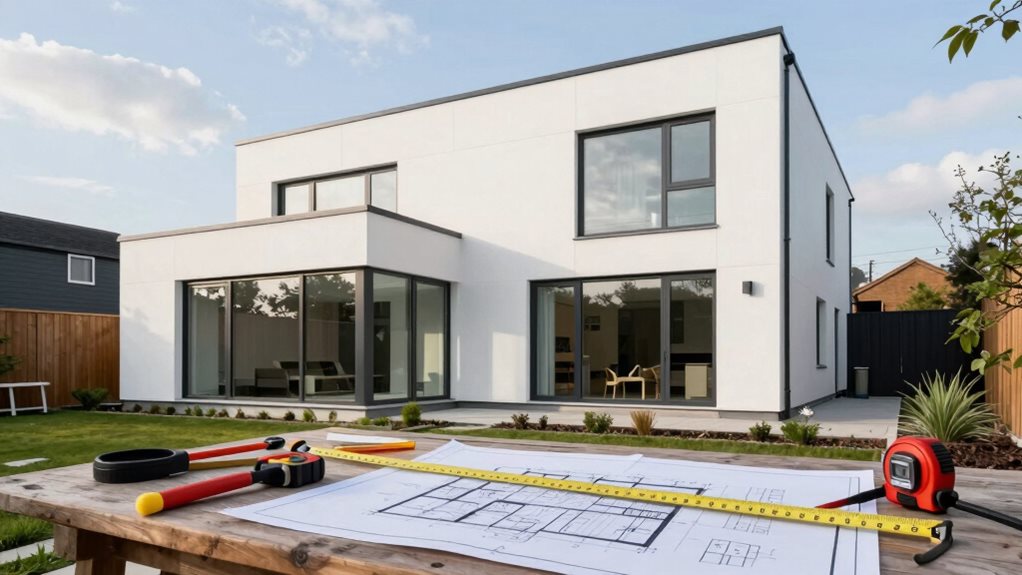
Thinking about a wrap-around extension in Manchester? Discover when this investment truly pays off and what factors determine your financial returns.
Wrap-around extensions in Manchester typically pay off when your neighborhood’s property values justify the £35,000-£100,000 investment. You’ll see better returns in premium areas like Didsbury and Chorlton, where you can recoup 70-80% of costs with high-quality finishes. Winter planning and spring construction offer cost advantages, while proper builder vetting guarantees quality workmanship. Consider both immediate value increases (15-20%) and long-term savings on potential moving costs. The following insights will help you maximize your extension’s financial benefits.
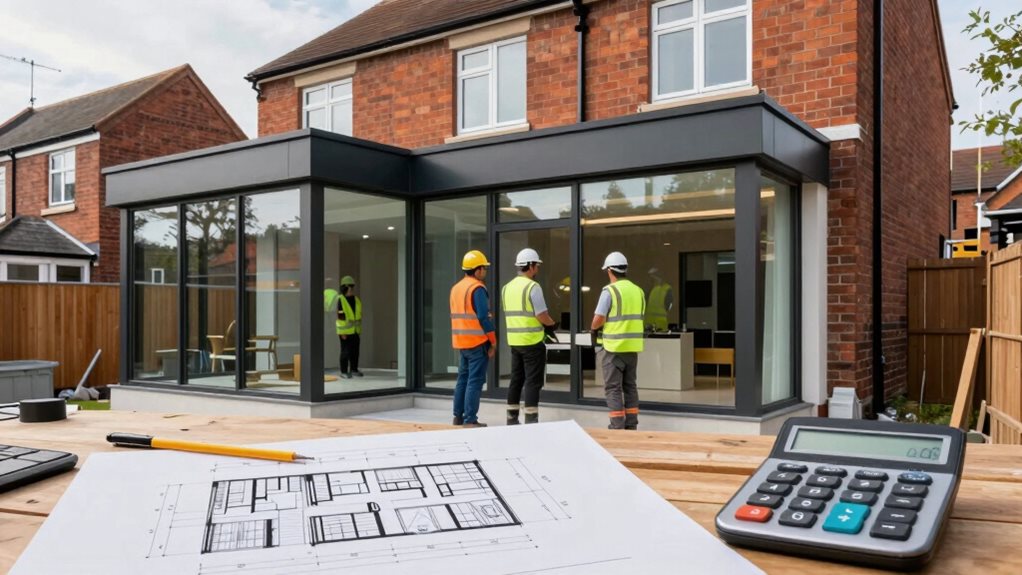
When starting on a wrap around extension project in Manchester, you’ll quickly discover that costs can vary considerably based on several key factors. Your total investment depends primarily on the extension’s size, quality of materials, and complexity of design options you select.
Most local homeowners invest between £35,000 and £80,000, with larger projects potentially exceeding £100,000.
For accurate cost estimation, consider engaging multiple builders for detailed quotes. Prices per square meter typically range from £1,500 to £2,500, depending on finishing standards.
Don’t forget to account for additional expenses like planning permission (approximately £250), building regulations approval (£500-£1,000), and potential architect fees (5-10% of total budget). Consulting with local builders experienced in house extension services can provide valuable insights on cost-effective solutions tailored to your project.
When you’re calculating the value of your wrap-around extension, you’ll find that Manchester’s premium square footage costs between £1,500-£2,200 per square meter, with notable variations across different neighborhoods.
Your investment’s return depends largely on the quality of finishes and materials—premium installations typically recoup 70-80% of costs in property value, while standard finishes might yield only 50-60%.
The local market currently favors extensions that blend seamlessly with original architecture, offering you both immediate living benefits and long-term financial advantages when compared to the expense of relocating to a larger property.
The financial impact of your wrap-around extension can’t be understood without examining the critical metric of cost per square foot. In Manchester’s current market, you’ll typically invest between £1,500-£2,200 per square foot for a quality wrap-around extension, though this varies based on your chosen finishes and structural requirements.
This cost breakdown reflects several factors: foundation work (approximately 15% of budget), structural modifications (25%), materials quality (30%), and labor specialization (30%).
When calculating your square footage investment, remember that larger extensions often benefit from economies of scale, potentially reducing per-unit costs by 10-15%.
Before committing, compare these figures with average Manchester property values in your neighborhood. A cost-to-value analysis will reveal whether your planned extension represents a sound investment or potential over-improvement for your specific market.
Despite following general pricing guidelines, Manchester’s property market demonstrates considerable neighborhood-specific variations that’ll directly impact your extension’s return on investment.
Areas like Didsbury and Chorlton consistently command 15-20% higher premiums for additional space compared to city-wide averages.
You’ll need to analyze recent local market data before committing to your wrap-around extension.
Property trends in South Manchester, for instance, show that three-bedroom homes with extensions often recoup up to 70% of construction costs immediately upon valuation, while similar projects in emerging neighborhoods might only recover 40-50% initially.
Consider consulting with estate agents who specialize in your specific postcode—they’ll provide insights about which extension features deliver maximum value in your immediate vicinity, helping you avoid overspending on improvements your market won’t reward.
Understanding your potential return on investment begins with recognizing that not all square footage commands equal value in Manchester’s extension market.
Premium spaces, particularly kitchens and bathrooms finished with high-end fixtures and premium materials, typically yield 15-20% more value per square meter than standard living areas.
When planning your wrap-around extension, you’ll need to balance current design trends with timeless appeal.
Open-concept kitchen-dining spaces consistently outperform separated rooms in resale value, while home offices have seen a considerable value surge since 2020.
However, luxury finishes in utility spaces often fail to recoup their costs.
The sweet spot? Mid-range premium materials in high-visibility areas, with standard quality in less prominent spaces.
This strategic allocation maximizes your return while maintaining the aesthetic appeal that Manchester buyers increasingly demand.
Before starting your wrap around extension project in Manchester, securing proper planning permission stands as a crucial first step that shouldn’t be overlooked.
Manchester’s local regulations vary by neighborhood, with conservation areas and listed buildings facing stricter scrutiny.
You’ll need to submit detailed architectural drawings, site plans, and sometimes a Design and Access Statement to the council.
Most wrap around extensions fall under permitted development rights if they extend less than 3 meters from the original house (for attached properties) or 4 meters (for detached homes).
However, if your plans exceed these limits or alter the property’s character considerably, you’ll require full planning permission.
Don’t risk costly mistakes—consult with a Manchester-based architect familiar with local planning frameworks before committing to designs.
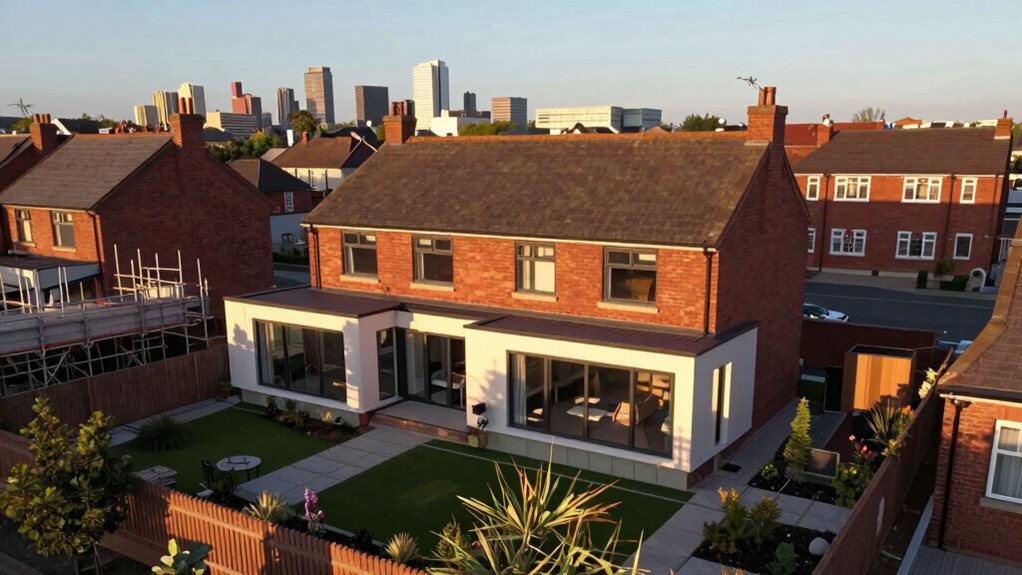
When evaluating a wrap around extension for your Manchester home, timing your project strategically can greatly impact both costs and potential return on investment. Greater Manchester’s property market has distinctive patterns you’ll want to take into account before breaking ground.
You’ll maximize value by monitoring these market indicators before committing to your extension project.
While market timing influences your extension’s cost-effectiveness, the type of home improvement you choose ultimately determines long-term value.
Wrap around advantages include maximizing your existing footprint without sacrificing garden space, creating a seamless flow between your kitchen, dining, and living areas that traditional extensions can’t match.
When weighing alternative renovations like loft conversions or basement developments, consider how you’ll actually use the space.
A wrap around extension typically delivers more practical, everyday living space that integrates naturally with your home. Unlike conservatories that often suffer from temperature regulation issues, wrap arounds maintain comfortable conditions year-round.
Your decision should balance immediate lifestyle improvements against potential return on investment.
In Manchester’s competitive market, well-executed wrap around extensions typically outperform other renovations for adding genuine property value.
When selecting a Manchester-based builder for your wrap-around extension, you’ll need to verify their credentials and examine their accreditation with organizations like the Federation of Master Builders or TrustMark.
You can assess their craftsmanship by reviewing their portfolio, requesting site visits to completed projects, and speaking with previous clients about their experiences.
A quality builder will demonstrate exceptional communication skills, responding promptly to your inquiries and providing clear timelines for your project’s completion.
Selecting a builder with proper credentials and accreditation stands as the cornerstone of your wrap-around extension project’s success.
When reviewing builder qualifications, you’ll want to verify their legitimacy before committing to any contracts.
Look for these crucial credentials:
Don’t hesitate to request documentation proving these credentials.
Remember, reputable builders will readily provide this information and often proudly display their accreditations on websites and business materials.
Your investment deserves nothing less than properly vetted professionals.
Before committing to any wrap-around extension builder, thorough evaluation of their portfolio serves as your gateway to understanding their craftsmanship quality.
When examining potential contractors, you’ll want to implement systematic portfolio evaluation techniques that reveal their true capabilities.
Request to see at least five completed projects similar to your vision, preferably with before-and-after photos. Don’t just rely on digital galleries—ask to visit completed extensions in person where possible. This investment assessment step saves thousands in potential remediation costs later.
Consider the diversity of their work: Can they handle various architectural styles? Have they worked with your specific property type before?
The most revealing portfolio elements often showcase how they’ve overcome challenges—look for projects where they’ve transformed difficult spaces or resolved complex structural issues.
Beyond evaluating portfolios, your builder’s communication style often forecasts the entire project experience.
When selecting a Manchester contractor for your wrap-around extension, prioritize those who demonstrate exceptional responsiveness throughout your engagement.
A builder who meets client expectations typically exhibits:
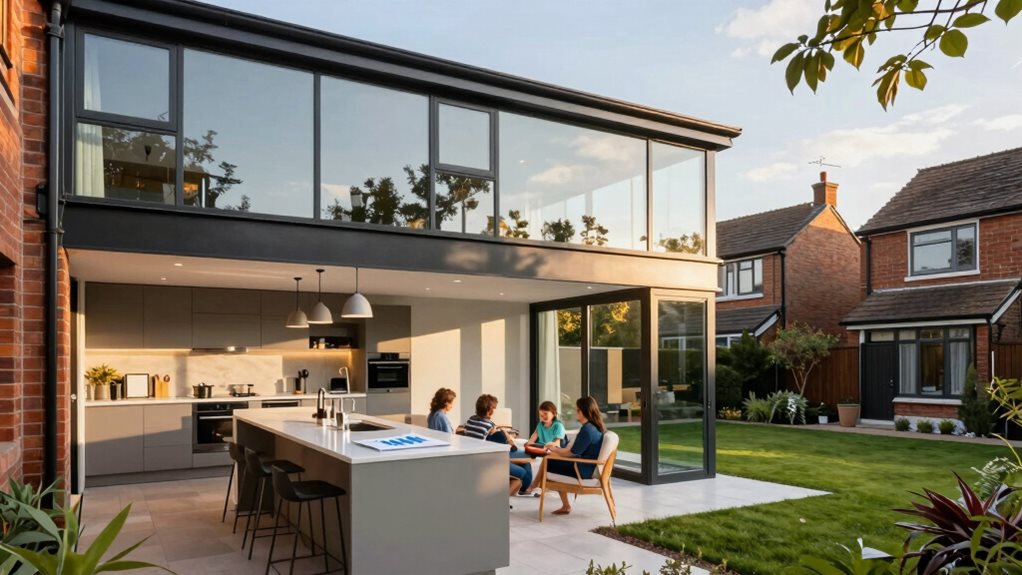
When you’re considering a wrap-around extension for your Manchester home, understanding the financial implications becomes crucial for making an informed decision. Your investment strategies should account for both immediate costs and future returns.
In the short term, you’ll face notable upfront expenses—typically £30,000-£80,000 depending on size and specifications. However, proper financial forecasting reveals that wrap-around extensions typically add 15-20% to your property’s value immediately upon completion.
Long-term benefits prove even more compelling. You’ll save on potential moving costs (often exceeding £20,000 when factoring in stamp duty and legal fees), while enjoying reduced energy bills through modern insulation standards.
Additionally, your extended living space provides flexibility as family needs evolve, potentially eliminating future renovation requirements or premature upsizing.
Your wrap-around extension can deliver substantial returns, particularly when executed with precision in Manchester’s competitive property market. Consider the Davies family in Didsbury, who invested £85,000 in their Victorian semi and saw a £145,000 value increase within two years. You’ll maximize your investment by selecting experienced local builders, timing construction during economic stability, and prioritizing quality materials. While not inexpensive, a thoughtfully planned extension often pays dividends both financially and in lifestyle improvement.