Phone:
(701)814-6992
Physical address:
6296 Donnelly Plaza
Ratkeville, Bahamas.

Phone:
(701)814-6992
Physical address:
6296 Donnelly Plaza
Ratkeville, Bahamas.
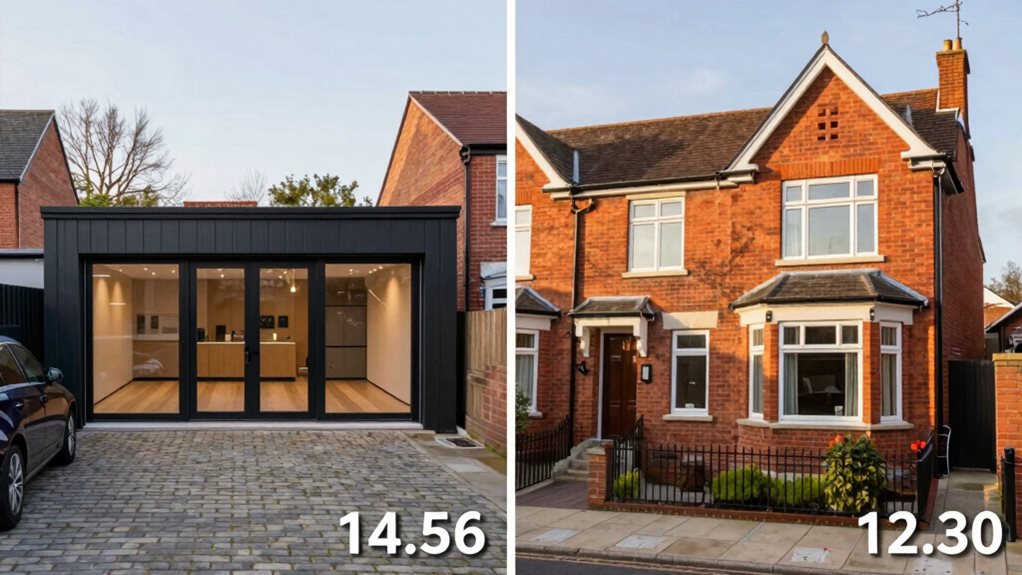
Opting between garage conversions and extensions in Manchester? Discover which investment could dramatically increase your property value while avoiding costly mistakes.
In Manchester, extensions typically add more value (70-75% ROI) than garage conversions (60-65% ROI), though your initial investment will be substantially higher. Extensions deliver £850-£1,200 per square metre in added value, while conversions cost £10,000-£20,000 but can add 10-15% to your property’s worth. Your decision should consider your budget, neighborhood trends, and planning restrictions which vary across Manchester’s diverse districts. The following analysis will help you maximize your property investment.
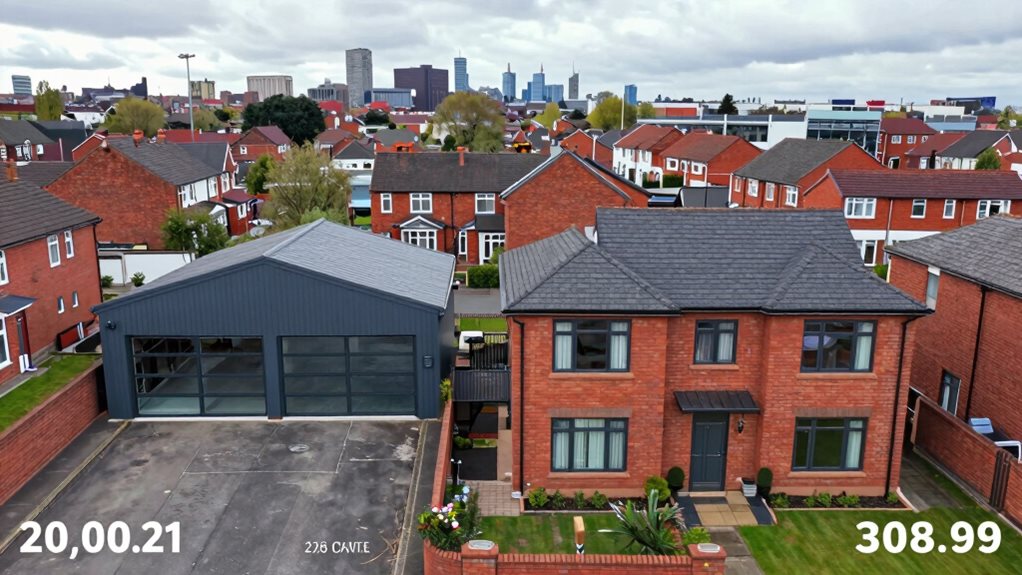
While Manchester’s property market continues to evolve at a rapid pace, you’ll notice that housing prices have remained resilient despite broader economic uncertainties. The city’s appeal to both investors and homeowners hasn’t waned, with certain districts seeing property values increase by 5-8% annually.
These property trends reflect Manchester’s status as a northern powerhouse with substantial ongoing development.
Manchester’s booming property landscape showcases its economic strength and ambitious urban transformation.
You’re likely observing more notable market fluctuations in suburban areas, where space premiums have increased since the pandemic. Homes with additional living space now command 10-15% higher valuations than comparable properties without such features. Additionally, the demand for house extensions has surged as buyers increasingly prioritize functional space over traditional layouts in this competitive Manchester market.
Because homeowners often focus exclusively on upfront expenses, they frequently overlook the complete financial picture of garage conversions in Manchester.
When planning your garage design, consider both immediate costs and long-term value. A typical conversion ranges from £10,000 to £20,000, depending on complexity and finishes.
Your cost breakdown should include structural modifications, insulation, electrical work, plumbing (if applicable), and interior finishing.
Remember that a well-executed garage conversion can add 10-15% to your property’s value—often delivering better returns than extensions costing three times as much. Many Manchester homeowners recoup their investment within 5-7 years through increased property values.
The most financially rewarding conversions tend to be those that create versatile spaces with broad appeal, rather than highly specialized rooms that might limit future buyer interest.
When considering an extension for your Manchester property, you’ll want to carefully examine your ROI per square metre to guarantee your investment aligns with local market valuations.
Your neighborhood’s property values can greatly impact your extension’s financial return, with areas like Didsbury and Chorlton typically supporting higher-end investments than other districts.
Comparing similar extensions in your immediate vicinity will provide essential benchmarks for your project’s potential value appreciation, helping you determine if the considerable upfront costs will translate to proportionate gains when selling.
The financial equation behind Manchester extension projects reveals a compelling return on investment that savvy homeowners can’t afford to overlook.
While garage benefits include lower initial costs, extensions typically deliver £850-£1,200 per square metre in added value—significantly outperforming garage conversions‘ £400-£600 range when properly executed.
You’ll find this metric particularly valuable when weighing your options.
Extension drawbacks include higher upfront investment and longer construction timelines, but the superior square metre returns often justify these challenges.
Consider that a quality 25m² extension could add £21,000-£30,000 to your property’s market value, representing a conversion rate that transforms building costs into equity at an impressive efficiency.
For maximum ROI, focus on high-quality finishes and guaranteeing the new space seamlessly integrates with your existing home structure.
Manchester’s property panorama shapes the true value proposition of your extension investment. Unlike standardized ROI calculations, your home’s value appreciation depends heavily on local preferences and neighborhood-specific market trends.
When consulting Manchester estate agents, you’ll discover that extensions in areas like Didsbury or Chorlham might yield different returns than identical projects in Levenshulme or Wythenshawe. This localized valuation reality means you should research comparable properties in your specific postcode before proceeding.
Many homeowners fail to recognize how Manchester’s micro-markets influence potential returns. The city’s rapid development means some areas prioritize outdoor space retention over additional square footage.
You’ll maximize your investment by aligning your extension plans with these evolving local preferences, creating space that resonates with Manchester’s unique market trends.
Comparing extension returns across Manchester’s diverse neighborhoods reveals striking investment disparities you’ll need to evaluate before breaking ground.
Your property’s location considerably impacts potential ROI, with neighbourhood demographics and property aesthetics playing vital roles in determining which improvement option makes financial sense.
Remember to research comparable properties in your specific area—what works in Rusholme mightn’t deliver the same value in Fallowfield despite their proximity.
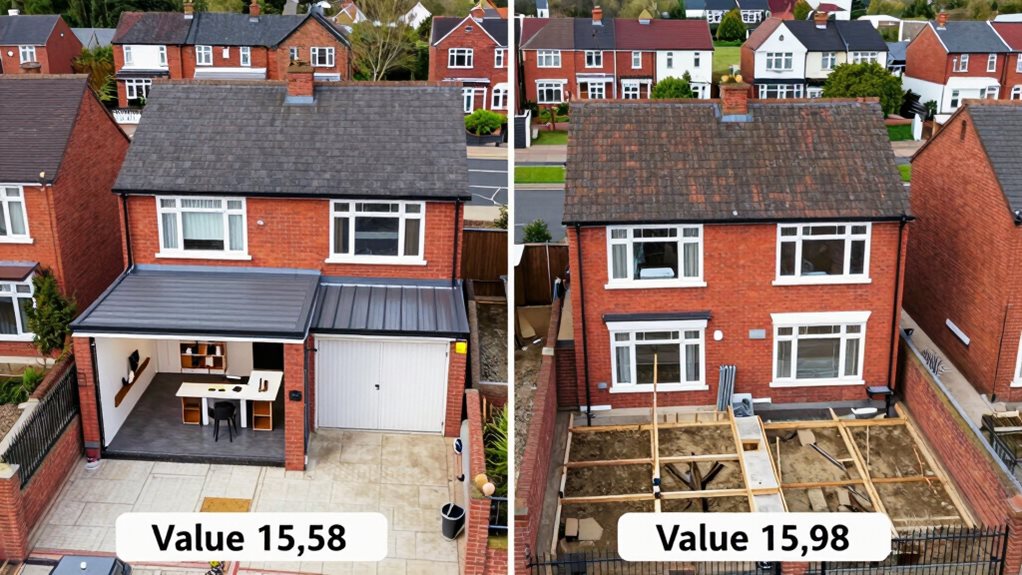
When considering home improvements in Manchester, understanding how your chosen project impacts property value through space utilization becomes crucial for making informed decisions.
Garage conversions typically maximize existing square footage without altering your property’s external footprint, offering efficient space optimization while maintaining original property aesthetics.
Maximize your Manchester home’s potential by transforming underutilized garage space without disrupting your property’s exterior character.
Extensions, however, create entirely new living space by expanding your home’s footprint, potentially yielding higher returns if executed thoughtfully.
Your decision should weigh both immediate needs and long-term value considerations. A well-designed garage conversion might deliver better pound-for-pound returns due to lower initial investment, while extensions often command premium valuations in Manchester’s competitive market.
Consider your neighborhood context too—some areas value off-street parking more than additional living space, affecting which option best suits your property’s value potential.
When considering a garage conversion or extension in Manchester, you’ll need to steer through the city’s complex planning permission terrain, which varies considerably between neighbourhoods like Didsbury and Chorlton.
Your project might fall under Permitted Development Rights, allowing you to proceed without formal permission, though these rights are often restricted in Conservation Areas like Castlefield or Heaton Park.
Before breaking ground, you’ll want to consult Manchester City Council‘s planning portal or a local architect who understands how regulations apply specifically to your property’s location and heritage designation status.
Although Manchester operates under the same national planning framework as other UK cities, each neighbourhood within the Greater Manchester area interprets and implements these regulations differently.
You’ll find that local zoning requirements vary greatly between areas like Didsbury, Chorlton, and Salford, with policy impacts affecting your project timeline and budget.
Understanding these variations will help you anticipate potential obstacles before investing in architectural plans or building materials.
Despite what many homeowners assume, permitted development rights in Manchester vary considerably between neighbourhoods and property types, creating a complex environment for renovation planning.
You’ll need to investigate whether your garage conversion falls within these rights, as many conversions don’t require full planning permission if they’re internal alterations only.
However, extensions typically face stricter planning regulations. In areas like Didsbury or Chorlton, conservation area status may limit what you can do under permitted development.
Meanwhile, properties in Wythenshawe might enjoy more flexibility. Don’t assume your neighbour’s successful conversion sets a precedent for yours—each case is evaluated individually.
Before committing to either option, contact Manchester City Council’s planning department for property-specific guidance.
This preliminary step could save you considerable time and money in your renovation expedition.
If your property sits within one of Manchester’s 35 designated conservation areas, you’ll face additional hurdles regardless of whether you choose a garage conversion or extension.
Conservation policies demand stricter adherence to aesthetic and structural guidelines that preserve neighborhood character. Before proceeding, consult with a planning expert familiar with Manchester’s heritage impact assessment requirements.
You’ll generally find garage conversions encounter fewer objections in conservation areas, as they work within existing structures rather than altering the property’s footprint—a key consideration when heritage impact is evaluated.
When planning your Manchester home improvement project, energy efficiency stands as a crucial factor that will impact both your daily comfort and long-term investment value.
Garage conversions typically offer better thermal performance since they utilize existing walls, making insulation more straightforward and cost-effective.
Extensions, however, allow you to implement cutting-edge energy solutions from the ground up, including high-performance windows and state-of-the-art heating systems.
You’ll find that buyers increasingly prioritize energy-efficient homes, with EPC ratings markedly influencing property values.
While extensions can incorporate the latest green technologies, conversions often require less embodied carbon in construction.
Consider how each option aligns with Manchester’s climate challenges—extensions might provide better solar gain opportunities, while conversions often need less energy to heat due to their smaller footprint.
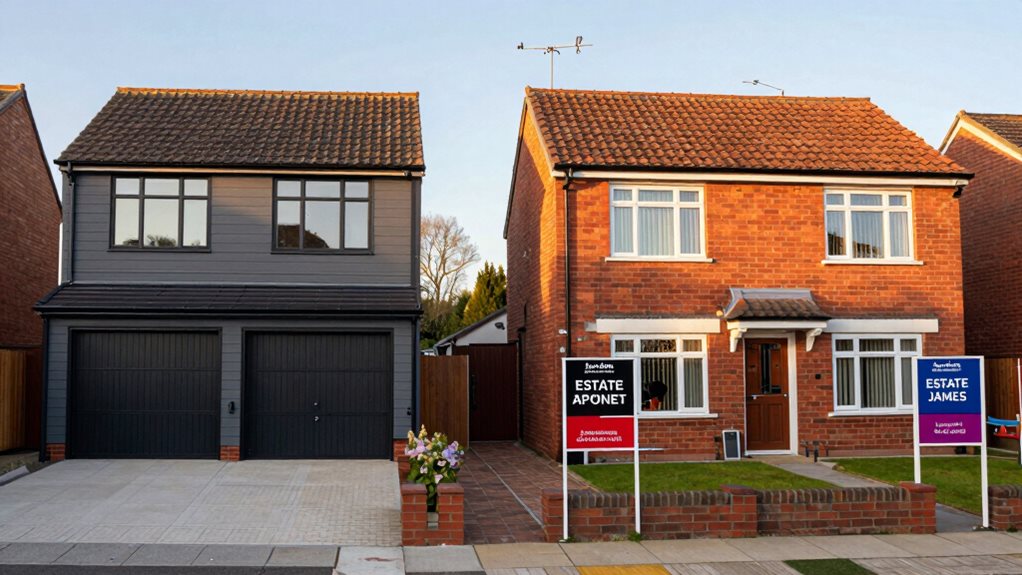
According to numerous Manchester estate agents, your choice between a garage conversion and extension greatly impacts potential return on investment.
Their ROI comparisons reveal that extensions typically yield higher returns in premium neighborhoods, while conversions offer better value in mid-range areas. You’ll want to weigh agent insights about your specific location before deciding.
You’ve steered through Manchester’s property maze only to discover there’s no universal winner in the garage-versus-extension debate. While your neighbors furiously convert garages into home cinemas you’ll never use, you’re left weighing actual returns against costs. The truth? It’s your specific circumstances—location, existing space, and budget—that’ll determine which option transforms your property from merely inhabitable to genuinely valuable. Choose wisely; your bank account is watching.