Phone:
(701)814-6992
Physical address:
6296 Donnelly Plaza
Ratkeville, Bahamas.

Phone:
(701)814-6992
Physical address:
6296 Donnelly Plaza
Ratkeville, Bahamas.
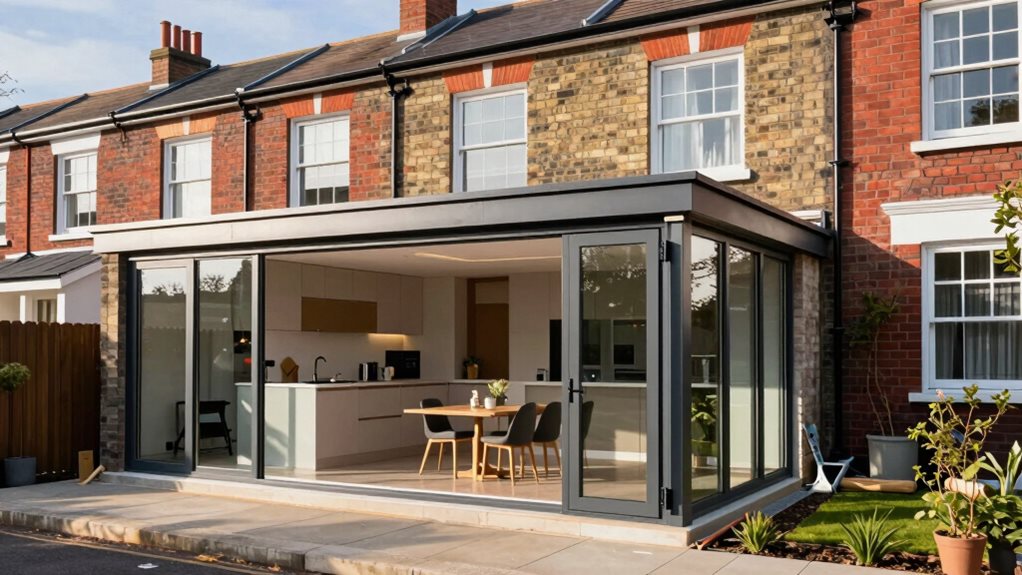
How Victorian terraced homeowners in Manchester are reclaiming wasted space to dramatically increase value and livability without sacrificing character.
Side return extensions offer Manchester terraced homeowners a transformative opportunity to expand living space while preserving Victorian character. You’ll benefit from increased property value (typically 10-15% ROI) while creating bright, multifunctional areas from previously dark hallways. Most projects fall under Permitted Development Rights, though conservation areas have stricter requirements. Balancing original features with contemporary designs—through skylights, glass doors, and exposed brickwork—creates harmonious shifts between old and new. Discover how these thoughtful transformations can revolutionize your terraced home’s functionality.
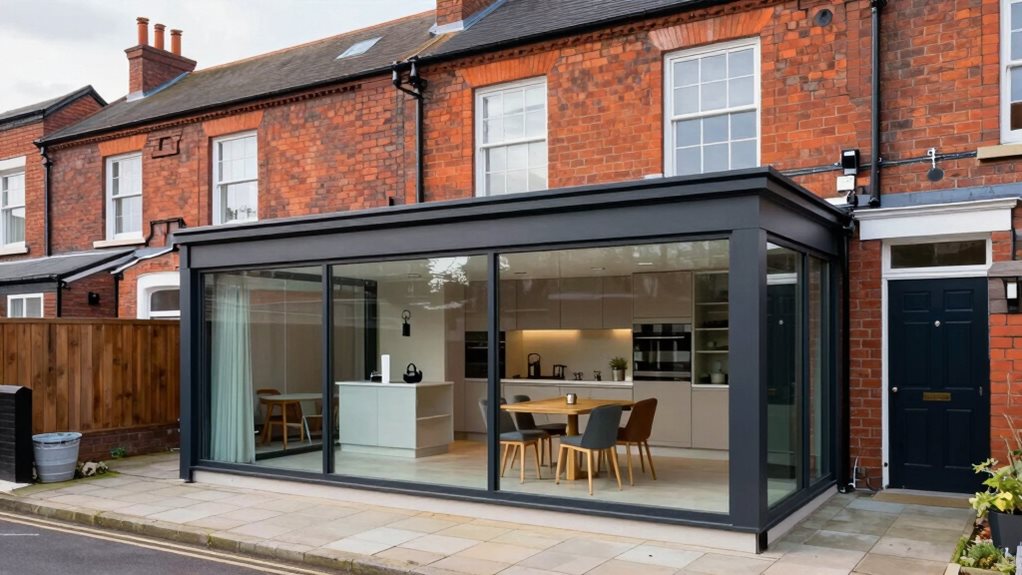
While many Manchester homeowners overlook the narrow space running alongside their terraced houses, this side return area represents one of the most valuable untapped opportunities for expanding your living space.
You’ll find that these seemingly insignificant passages can transform your property, increasing both its functionality and value.
With thoughtful side return design, you’re not merely adding square footage—you’re reimagining your home’s flow.
Victorian and Edwardian terraced home potential is often locked within these underutilized corridors. By incorporating this space into your kitchen or living area, you’ll create a more open, light-filled environment that better suits modern living.
The transformation typically eliminates the traditional narrow, dark hallways that characterize Manchester’s period properties, replacing them with bright, multifunctional spaces that improve your daily life. Additionally, expert home improvement options are available to ensure that the new extension is seamlessly integrated with the rest of your home.
Your Manchester side return extension project will likely fall under Permitted Development Rights, which can eliminate the need for full planning permission if your design meets specific size and height criteria.
When you’re located in a Conservation Area, you’ll need to maneuver additional restrictions that protect the historical character of your neighborhood.
Understanding these requirements early in your planning process will help you avoid costly redesigns and delays, whether you’re working within permitted development guidelines or need to pursue full planning approval.
Understanding Manchester’s specific permitted development rights can save you considerable time and money when planning a side return extension.
While many side extensions fall under permitted development, Manchester’s local regulations impose certain limitations you’ll need to maneuver carefully.
Your side extension typically won’t require formal planning permission if it extends no more than 3 meters from the original house and doesn’t exceed 4 meters in height.
However, you’ll still need to comply with building regulations regardless of permitted development status. These rights don’t apply to conservation areas or listed buildings, where stricter controls exist.
It’s advisable to apply for a Lawful Development Certificate before commencing work—this provides legal confirmation that your project meets permitted development criteria and protects you from potential enforcement action.
When your project exceeds permitted development parameters, obtaining full planning permission becomes essential for Manchester side return extensions. The council’s planning department will evaluate your application based on several key factors, with design aesthetics and planning implications taking center stage.
Your application should address:
You’ll need to submit detailed architectural drawings, a design and access statement, and potentially a heritage statement if your property is in a conservation area or has historical significance.
Manchester’s conservation areas demand heightened sensitivity when planning side return extensions, as these designated zones protect areas of special architectural or historic interest.
When your property falls within these boundaries, you’ll face stricter historical regulations designed to preserve neighborhood aesthetics and cultural heritage.
You’ll need to submit detailed plans showing how your extension respects the existing architectural style, materials, and proportions of surrounding buildings.
Consider incorporating traditional building techniques and matching original features where possible.
Conservation officers typically scrutinize window styles, rooflines, and external materials carefully before granting approval.
Don’t let this discourage you—many successful extensions exist in conservation areas.
Consulting with architects who specialize in heritage properties can help steer through these requirements while still achieving your desired living space, balancing modern needs with historical preservation.
How effectively your side return extension captures sunlight will dramatically transform both the ambiance and functionality of your new space.
In Manchester’s often overcast climate, implementing strategic natural light solutions isn’t just about aesthetics—it’s crucial for creating a vibrant, energy-efficient home. Your window placement decisions will greatly impact how light travels throughout the day.
Consider these proven approaches:
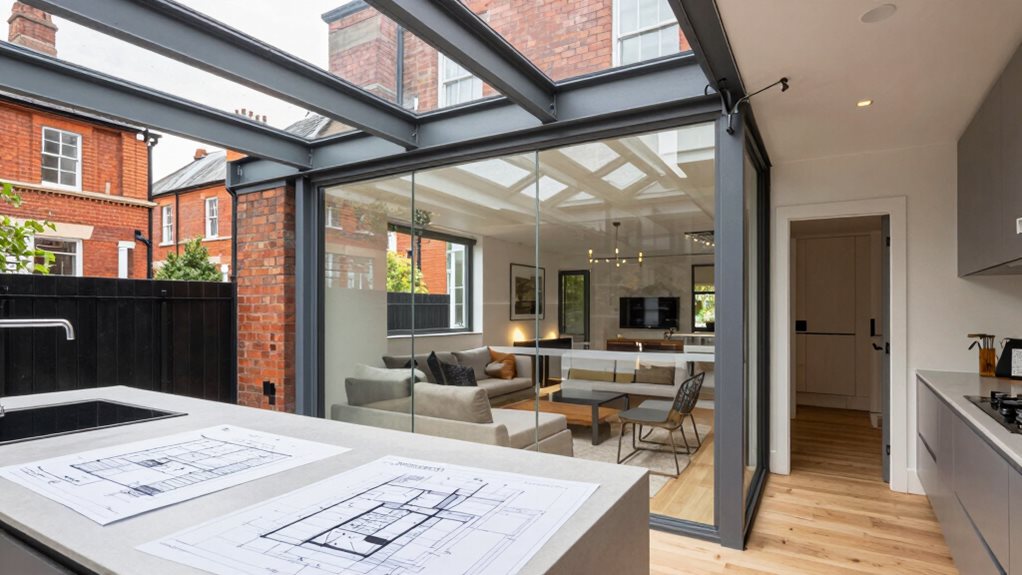
Victorian terraced properties in Manchester present unique structural hurdles that you’ll need to navigate when planning your side return extension.
The original load-bearing walls require careful assessment to maintain structural integrity while opening up your space. Consider steel beam installations to redistribute weight properly when removing walls.
You’ll also face the challenge of integrating modern design aesthetics with period features. Rather than viewing this as an obstacle, accept the opportunity to create a striking contrast between old and new.
Exposed brickwork can complement contemporary glazing, creating a visual narrative that honors your home’s heritage.
Remember that Victorian properties often have shallow foundations, so underpinning may be necessary.
Working with builders experienced in Manchester’s terraced homes guarantees these challenges are addressed proactively rather than becoming costly surprises.
Selecting the right builder for your side return extension represents perhaps the most crucial decision you’ll make throughout your entire project.
Manchester’s architectural setting demands specialists who understand the unique challenges of terraced properties.
Don’t rush this decision—your investment deserves a builder with proven expertise.
When vetting potential contractors, focus on:
Request detailed references from previous clients who’ve undergone similar extensions.
This due diligence might extend your planning phase, but will ultimately protect your investment and guarantee construction proceeds effortlessly.
Understanding the financial commitment and duration of side return extensions in Manchester requires careful consideration of several key factors.
The average costs for these projects typically range from £35,000 to £65,000, depending on the size, specification, and existing structural conditions of your property. Location within Manchester also impacts pricing, with central areas commanding premium rates.
Side return extensions in Manchester range from £35,000-£65,000, with pricing influenced by property specifications and premium rates in central locations.
Project timeframes generally span 10-14 weeks from breaking ground to completion, though this can extend if you’re incorporating specialized features or encountering unexpected structural issues.
Planning permission typically takes 8-10 weeks before construction begins. You’ll want to factor in seasonal considerations too—winter projects may face weather delays, while summer builds often book months in advance.
Discussing both budget and timeline expectations early with your chosen builder guarantees you’ll have realistic expectations for your side return investment.
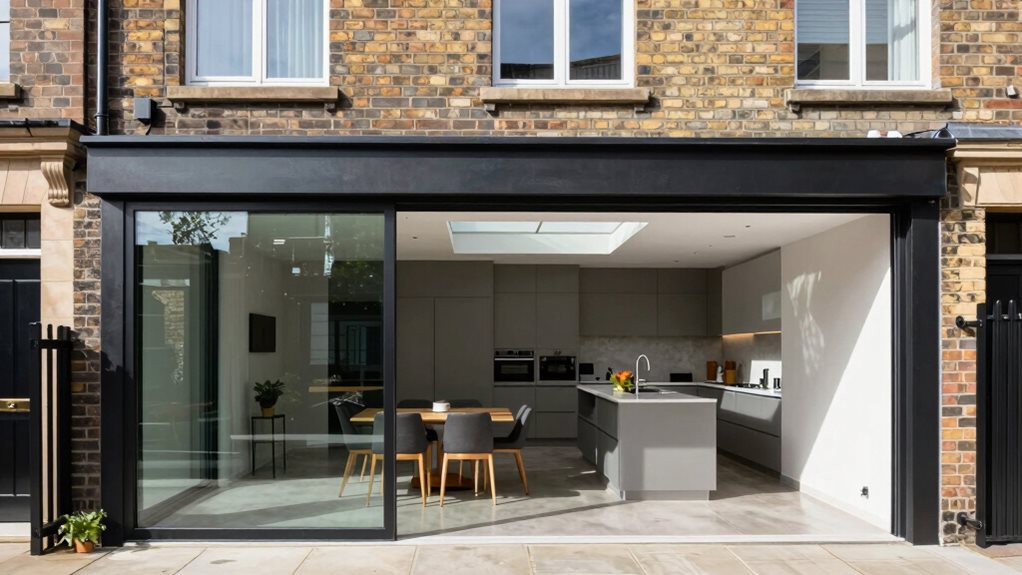
Explore how Manchester homeowners have transformed their properties through our portfolio of completed side return extensions, including a stunning Victorian revival in Chorlton that blends period features with modern living.
You’ll find inspiration in our Didsbury project, where we maximized a compact footprint to create an expansive family kitchen that doubled the available ground floor space.
The Rusholme light transformation stands as perhaps our most innovative work, where strategic skylights and glass walls turned a previously dark corridor into the brightest spot in a century-old terraced home.
When Manchester’s historic Chorlton neighborhood meets modern design sensibilities, the results can be truly breathtaking. Our recent side return extension project preserved the original Victorian aesthetics while introducing contemporary functionality to a charming terraced home.
By respecting Chorlton architecture’s distinctive character, we created a seamless shift between old and new.
This transformation included:
You’ll appreciate how this extension not only expanded living space but also improved the property’s value while honoring its historical significance—a perfect balance of preservation and innovation.
Despite Didsbury’s reputation for spacious Victorian properties, homeowners in this prestigious Manchester suburb often struggle with outdated layouts that fail to meet modern living requirements.
Your Didsbury renovation can transform these constraints into opportunities with a thoughtfully designed side return extension.
We’ve completed numerous projects where families gained up to 40% more ground floor space without sacrificing garden access. Through strategic Didsbury design principles, you’ll maintain the period character while creating light-filled, multifunctional areas that serve your lifestyle needs.
Imagine preparing meals while supervising homework or entertaining guests in a seamless, flowing space.
Your extension can incorporate skylights, sliding doors, and integrated storage solutions that maximize every square meter.
Consider how a properly executed side return project doesn’t just add space—it reimagines how you experience your home daily.
Similar to our Didsbury transformations, Rusholme properties present unique opportunities for architectural reinvention through side return extensions.
You’ll discover that Rusholme’s Victorian terraces can be reimagined with thoughtful design that balances original character with contemporary living needs.
Our Rusholme light transformation projects typically include:
You’ll appreciate how these thoughtful interventions preserve Rusholme’s distinctive character while dramatically improving your daily living experience.
Many Manchester homeowners face the unique challenge of blending contemporary kitchen designs with the character-rich architecture of their traditional terraced properties.
You’ll want to strike a balance between modern functionality and period charm when planning your side return extension.
Consider how kitchen aesthetics can complement original features rather than compete with them. Opt for cabinetry that echoes architectural details from your home’s era while incorporating modern appliances seamlessly.
Space efficiency becomes essential in these narrow properties—vertical storage solutions and multi-functional islands maximize every square inch without overwhelming the space.
When designing your new kitchen extension, you might incorporate traditional materials like exposed brick or timber beams alongside sleek surfaces, creating a harmonious shift between old and new that respects your home’s heritage while meeting your contemporary lifestyle needs.
Your side return extension can honor your home’s Victorian legacy while embracing contemporary design principles.
You’ll want to carefully preserve original features—from ornate ceiling roses to period fireplaces—as these elements provide character and historical context that modern builds simply can’t replicate.
When planning a side return extension, balancing modern design with your home’s historical character creates a seamless shift between old and new.
Preserving aesthetics while improving character requires thoughtful consideration of your property’s original elements. Manchester’s terraced homes often feature distinctive period details worth celebrating in your renovation project.
Consider these approaches to maintain your home’s charm:
Your extension shouldn’t overshadow what makes your home special—instead, let it highlight these characteristics while delivering the modern functionality you need.
Although Victorian homes possess distinctive architectural elements worth preserving, they can seamlessly integrate with modern design to create striking contrasts that enrich both styles.
When planning your side return extension, consider how to balance Victorian aesthetics with contemporary features. You’ll achieve stunning results by maintaining original cornicing, ceiling roses, and fireplaces while incorporating sleek glass panels, minimalist fixtures, and open-concept layouts.
The juxtaposition of old and new creates visual interest—imagine exposed brick walls alongside modern kitchen cabinetry, or traditional sash windows complementing bifold doors.
Your Manchester builders should understand how to highlight these contrasting elements rather than forcing them to compete. By thoughtfully blending periods, you’ll create a home that honors its historical significance while meeting your modern lifestyle needs, resulting in a truly personalized space that stands the test of time.
Successfully blending period features with modern design elements creates a harmonious balance that respects a building’s heritage while embracing contemporary functionality.
When you’re planning your side return extension in Manchester, you’ll want to preserve those historic aesthetics while achieving a contemporary fusion that works for modern living.
Consider these approaches to blend old with new:
You’re not only building an extension; you’re crafting a narrative that honors your home’s past while boldly stepping into its future.
The result? A uniquely personalized space that feels both timeless and fresh.
Beyond merely creating additional living space, a side return extension represents one of the most financially savvy home improvements you’ll ever make.
In Manchester’s competitive property market, these extensions typically deliver impressive investment returns, often exceeding the initial construction costs by 10-15% when professionally appraised.
You’re not only gaining square footage—you’re strategically repositioning your home in the marketplace.
Estate agents consistently report that properties with thoughtfully designed side returns attract more viewings and spend less time on the market.
The financial mathematics are compelling: while costs vary depending on specifications, most Manchester homeowners recoup their investment within 5-7 years through increased property value, even before considering the quality-of-life improvements you’ll enjoy daily in your transformed space.
A side return extension transforms your Manchester terrace from caterpillar to butterfly—emerging with expanded wings of space and light. You’ll maneuver planning hurdles, structural challenges, and design decisions, but the metamorphosis is worth it. By choosing experienced builders who understand Manchester’s architectural heritage, you’re more than simply extending your home; you’re improving its legacy while adding up to 20% to your property’s value.